
The Evolution of Cut-Resistant Chainmail Stainless Steel Advantages
When you’re buying chainmail for protection or display, it can be tough to figure out which products are truly high-quality. Whether you’re a professional, a collector, or someone looking for reliable protection, the process of identifying top-tier chainmail often feels overwhelming. The concern is real: How can you ensure you’re getting something safe, durable, and long-lasting? In this guide, I’ll walk you through how to distinguish the high-quality pieces from the low-quality ones, so you can make informed decisions every time you purchase.
Common Challenges in Evaluating Chainmail Quality
Many people run into the same issues when trying to evaluate chainmail. It’s easy to get confused by misleading marketing, unclear product descriptions, or even the sheer variety of choices available. Here are a few pain points you might encounter:
-
Welded Rings vs Open Rings:
-
You might have come across chainmail made with open rings or poorly welded rings, which can compromise the structural integrity of the piece. While open rings might seem sufficient for display purposes, they are not nearly as durable or safe as welded rings, especially for protection.
-
-
Uncertainty About Stainless Steel Grades:
-
When you see terms like ‘304’ and ‘316’ stainless steel, you might wonder how they impact the quality of the chainmail. Understanding the difference between these grades can be confusing, but it’s essential when it comes to long-term durability and corrosion resistance, especially in industrial settings.
-
-
Weave Weaknesses:
-
If the weave pattern is inconsistent, the chainmail could be more prone to wear and tear. Some chainmail uses weaker patterns or inconsistent ring sizes that fail under stress, which isn’t ideal if you’re using it for protection.
-
Aegimesh Chainmail: Your Guide to Quality
Here’s where Aegimesh Chainmail comes in. With years of experience in the field, we’ve developed a guide to help you evaluate chainmail’s true quality. Whether you’re purchasing for industrial use, historical replicas, or cosplay, our inspection tools and step-by-step process ensure you’re always choosing the best product for the job.
Let’s break down the crucial elements you should inspect to ensure that your chainmail stands up to expectations.
How to Inspect Chainmail: A Step-by-Step Guide
1. Material Type 304 vs 316 Stainless Steel
Stainless steel is the backbone of high-quality chainmail. But did you know that not all stainless steels are created equal? The two most common types you’ll encounter are 304 and 316 stainless steel. Both are highly durable, but they serve different purposes.
-
304 Stainless Steel: This is the most common grade for general-use chainmail. It’s resistant to rust, oxidation, and corrosion, but it’s not as resistant to saltwater or acidic environments as 316. If you plan to use your chainmail in mild environments, 304 should suffice.
-
316 Stainless Steel: If you need more resistance to corrosionsay, for food handling or industrial environmentsyou’ll want 316. This grade has higher resistance to rust, especially in saltwater or chlorine-rich environments. It’s ideal for industrial applications like cut-resistant gloves in kitchens or heavy-duty protective wear.
2. Inspecting Welded Rings vs Open Rings
When purchasing chainmail, one of the first things to check is whether the rings are welded or open. This is a key indicator of quality. Here’s why:
-
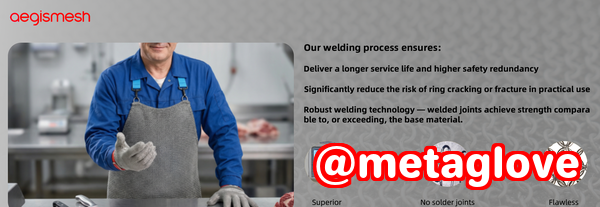
Welded Rings: These rings are heated and fused together, creating a more durable and secure connection. If you’re buying chainmail for any kind of protection, welded rings are a must. They ensure that your chainmail holds up to stress without the risk of rings coming undone.
-
Open Rings: In contrast, open rings simply bend back into place, offering much weaker structural integrity. These are typically found in decorative pieces, which are okay for cosplay but shouldn’t be used in industrial or protection-based scenarios.
Tip: To check if the rings are welded, look at the ends of the rings. If they’re smooth with no gaps, they’re likely welded. If you can see the gap where the ends meet, then you’re dealing with open rings.
3. Ring Thickness and Inner Diameter
While the material and welding are key factors, don’t forget to check the thickness and diameter of the rings. The thickness of the wire used in the rings will directly impact the chainmail’s durability. Thin wire will bend or break more easily, while thicker wire increases strength.
-
Wire Thickness: For industrial protection or cut resistance, a thicker wire is essential. If you’re buying for decorative purposes, thinner wire might suffice, but always rememberthinner wire means less protection.
-
Inner Diameter: The diameter of the rings determines how tight or loose the weave is. A smaller diameter results in a denser, stronger weave. For strength and safety, look for a smaller inner diameter (relative to the wire thickness) for more effective cut resistance.
4. Weave Patterns European 4-in-1 for Durability
One of the most common and reliable weave patterns is the European 4-in-1. In this pattern, each ring interlocks with four other rings, creating a stable and strong structure.
-
Strength and Flexibility: The 4-in-1 pattern is widely regarded for offering a good balance between strength and flexibility. It is strong enough for protection and industrial use, yet flexible enough for comfortable wear.
5. Performing the Pull Test
A simple but effective way to check chainmail quality is the pull test. Gently pull at the rings to see if they come apart or if the weave becomes loose. If you notice any movement or the rings slip out of place, the chainmail may not be as durable as you need it to be.
6. Identifying Signs of Corrosion or Poor Craftsmanship
Corrosion is a big red flag when inspecting chainmail. Check for discoloration or rust spots, especially around the rings’ seams. These could indicate that the stainless steel is of poor quality or that the product hasn’t been properly treated. Poor craftsmanship, like uneven ring sizing or a lopsided weave, is also a sign of a low-quality product.
Why Proper Chainmail Inspection Matters
You might wonder why it’s so important to go through these inspection steps. Well, there are a few reasons:
-
Avoid Unsafe Chainmail: Whether you’re using it for industrial cut protection, food handling, or even cosplay, low-quality chainmail can lead to safety risks. If it’s too weak or poorly made, it could fail when you need it the most.
-
Durability and Longevity: Quality chainmail lasts longer. By selecting high-quality materials, welded rings, and dense weaves, you can ensure that your purchase lasts for years without significant wear and tear.
-
Money-Saving: No one wants to spend money on a product that won’t hold up. By taking the time to check for the signs of low-quality chainmail, you can avoid wasting your hard-earned cash on subpar products.
Conclusion: My Top Recommendations for Buyers
I highly recommend following the inspection steps we’ve covered to ensure your chainmail meets the highest safety and durability standards. Whether you’re buying for industrial use, cosplay, or as a collector’s piece, quality should always be your priority.
If you want to learn more about identifying top-quality chainmail, I suggest you visit our full guide at Aegimesh Chainmail. Our detailed inspection tools can help you make informed decisions every time.
FAQ
1. How can I tell if a chainmail ring is welded or open?
-
Look for smooth, seamless ends to the rings. Welded rings will have no visible gap. Open rings will have a noticeable seam where the ends meet.
2. Which stainless steel grade is best for long-lasting chainmail?
-
If you need chainmail for cut protection in harsh environments, opt for 316 stainless steel. For general use, 304 stainless steel will do just fine.
3. How do I inspect the weave pattern for strength?
-
Check for the European 4-in-1 weave, which is known for its durability and strength. Make sure the rings interlock tightly, and there are no gaps in the weave.
4. What are the signs of low-quality or unsafe chainmail?
-
Look for signs of corrosion, poorly welded rings, uneven weaves, or weak wire thickness. These indicate that the chainmail may not hold up under stress.
5. Can decorative chainmail be used for protective purposes?
-
While decorative chainmail can look great, it’s generally not suited for protection. Make sure to check the weave, wire thickness, and ring quality before using it for safety.
6. How do I choose the right chainmail for industrial vs cosplay use?
-
For industrial use, choose thicker wire, welded rings, and corrosion-resistant stainless steel. For cosplay, decorative chainmail with lighter rings and more flexible weaves may suffice.