
The Cultural and Historical Heritage of Chainmail
Chainmail, a staple in both history and modern industries, has a rich cultural and historical significance. From protecting knights in battle to serving as a unique fashion statement today, its journey across centuries has proven its lasting value. But how do you determine the quality of chainmail? Whether you’re buying it for industrial use, cosplay, or even a historical reenactment, knowing how to evaluate chainmail is crucial to ensuring you invest in a product that’s both durable and safe.
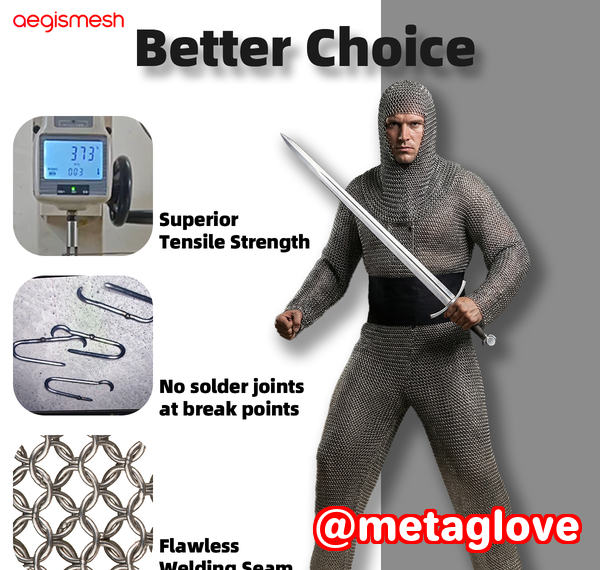
When purchasing chainmail for protection or display, I often struggle to know which products are genuinely high-quality. With so many options out there, how can I differentiate between a piece that’s designed to last and one that might fall apart after a few uses? It’s a common dilemma for buyers, collectors, and industrial users alike. Thankfully, understanding how to assess chainmail’s quality is easier than it seems when you know what to look for. In this guide, I’ll walk you through how to inspect and evaluate chainmail to ensure you’re getting the best.
The Chainmail Puzzle: Common Challenges in Identifying Quality
When faced with a sea of chainmail options, it’s easy to get overwhelmed. However, there are a few key issues that come up time and time again when evaluating chainmail:
-
Welded Rings vs. Open Rings: Many buyers find it challenging to distinguish between welded rings (which are stronger and more durable) and open rings (which are weaker and more prone to coming undone).
-
Stainless Steel Grades: With options like 304 and 316 stainless steel, it can be difficult to know which is best for your needs. Aegimesh Chainmail uses the highest-quality stainless steel, but not all manufacturers are as transparent.
-
Weak Weaves: While the weave pattern may look simple, inconsistent or weak weaves can drastically reduce the durability of the chainmail. This is particularly concerning for industrial applications where safety is paramount.
Aegimesh Chainmail: A Guide to Quality
Whether you’re considering chainmail for industrial use or a cosplay project, understanding these pain points will help you avoid costly mistakes. Here’s a simple, step-by-step guide to evaluating the quality of chainmail:
1. Inspect the Material: Stainless Steel Grades Matter
Not all stainless steel is created equal. When buying chainmail, you want to ensure that you’re selecting the right type of stainless steel. Aegimesh Chainmail, for example, uses 304 and 316 stainless steel, both of which offer excellent durability and corrosion resistance. But how can you tell the difference?
-
304 Stainless Steel: While affordable and commonly used, 304 is less resistant to corrosion in harsh environments. It’s perfect for decorative pieces or light-duty use but might not withstand industrial or food-processing environments as well.
-
316 Stainless Steel: This is the gold standard for chainmail used in industries like food handling or for heavy-duty protection. It’s highly resistant to corrosion, making it the best choice for long-lasting protection.
2. Check the Ring Construction: Welded or Open?
When you’re looking at chainmail, it’s important to distinguish between welded rings and open rings. Welded rings are far superior in terms of durability because they are securely fused together. Open rings, on the other hand, can open up with use, weakening the entire structure. Here’s how to check:
-
Pull Test: Gently tug on individual rings. Welded rings should stay firmly in place, while open rings might give way under slight pressure.
-
Visual Inspection: Welded rings usually have a small, almost imperceptible seam where the ends meet. Open rings have a noticeable gap, making them easier to pull apart.
3. Inspect the Wire Thickness and Ring Diameter
Another essential factor in evaluating chainmail quality is the wire thickness and ring diameter. These elements affect the strength and flexibility of the chainmail.
-
Wire Thickness: The thicker the wire, the stronger the chainmail. However, thicker wire may reduce flexibility. Look for a balance that suits your needs.
-
Ring Diameter: If the rings are too large, they can make the chainmail too loose, compromising its protective capability. If they’re too small, the weave might become too rigid and uncomfortable. A good balance is key, and a weave like European 4-in-1 is highly recommended for durability and flexibility.
4. Evaluate the Weave Pattern
One of the most recognizable aspects of chainmail is its weave pattern. The most popular and effective pattern is the European 4-in-1 weave. This is where each ring passes through four others, creating a tight, stable structure. The tighter and more uniform the weave, the better.
Inspect the weave for gaps or irregularities. A low-quality weave can compromise the protection it offers, especially if used in high-risk scenarios like industrial work or combat reenactments.
5. Look for Corrosion or Poor Craftsmanship
Corrosion, rust, and weak craftsmanship are signs of low-quality chainmail. For industrial applications like cut-resistant chainmail, it’s essential that the material remains resistant to rust, even in wet or humid environments. Check for:
-
Signs of Rust: Even minor rust can indicate poor craftsmanship or inferior materials.
-
Uneven Weave: A rough, irregular weave might mean that the chainmail wasn’t properly constructed, which could lead to weak spots.
6. Know the Right Type for Your Needs
Chainmail isn’t one-size-fits-all. The right choice for a historical costume may not be the right choice for industrial cut protection or cosplay. Here’s a quick breakdown of the ideal types for each use:
-
Industrial Use: Opt for 316 stainless steel with a European 4-in-1 weave. The added corrosion resistance and durable weave pattern will keep you safe and comfortable.
-
Food Handling: Again, go for 316 stainless steel to prevent contamination and ensure a long-lasting product.
-
Cosplay and Decorative Use: 304 stainless steel or aluminum might suffice for lighter, decorative chainmail, but be cautious about its durability.
-
Historical Replicas: Look for authentic weaves like 4-in-1 or 6-in-1 that replicate the traditional strength and craftsmanship of ancient chainmail.
Why Chainmail Quality Matters
You may wonder, “Does it really matter if my chainmail is of high quality?” Absolutely. Low-quality chainmail might save you money upfront, but it could pose serious risks later on. Whether you’re using chainmail for cut-resistant protection or simply as part of a cosplay or historical display, ensuring it meets high-quality standards is the key to durability and safety.
When you invest in chainmail, you’re making a commitment to protect yourself (or your collection) from wear and tear. A little extra effort in inspecting your chainmail will save you from purchasing a product that could fail when you need it the most.
Conclusion: How to Buy the Best Chainmail
In summary, I highly recommend following these steps to ensure any chainmail purchase meets safety and durability standards. By inspecting the material, checking for welded rings, evaluating wire thickness and ring diameter, and assessing the weave pattern, you can easily identify high-quality chainmail. Whether you need it for protection in industrial environments or as part of a cosplay ensemble, these guidelines will help you make informed choices and avoid wasting money on subpar products.
Learn more about identifying high-quality chainmail products: Aegimesh Chainmail Guide.
Check out our detailed chainmail inspection guide today.
FAQ
1. How can I tell if a chainmail ring is welded or open?
Check the ring for a visible seam. Welded rings will be fused together seamlessly, while open rings will have a noticeable gap.
2. Which stainless steel grade is best for long-lasting chainmail?
For the most durable and corrosion-resistant chainmail, 316 stainless steel is the best choice. It’s ideal for industrial and food-processing applications.
3. How do I inspect the weave pattern for strength?
Look for a consistent European 4-in-1 weave, which ensures a tight, durable structure. Avoid irregular weaves or gaps between rings.
4. What are the signs of low-quality or unsafe chainmail?
Signs include visible rust, poorly welded rings, uneven weave, and thin or corroded wire. These factors can all compromise the chainmail’s effectiveness.
5. Can decorative chainmail be used for protective purposes?
While decorative chainmail might look great for cosplay, it is usually made with lighter materials that won’t provide the same level of protection as industrial-grade chainmail.
6. How do I choose the right chainmail for industrial vs. cosplay use?
For industrial use, prioritize 316 stainless steel with a tight, durable weave like European 4-in-1. For cosplay, 304 stainless steel or aluminum may be sufficient, depending on the desired look and durability.