
Mesh Boning Aprons: What Makes Ring Mesh the Superior Choice
When it comes to choosing the right chainmail, whether for protection in industrial settings, food handling, or cosplay, quality is everything. Have you ever found yourself standing in a store or browsing online, unsure if you’re looking at genuine, high-quality chainmail or just a cheap imitation? It’s a common issue. With so many chainmail options available, it can be overwhelming to figure out which ones are durable, safe, and actually worth your investment.
That’s where understanding how to evaluate the quality of chainmail comes in. It’s not just about aestheticsthough they are important for collectors and cosplayersit’s also about performance. A chainmail apron used for food handling, for instance, should be able to withstand sharp knives and resist corrosion. The same goes for industrial uses or cosplay, where durability and safety are top priorities.
Evaluating Chainmail Quality: Common Pitfalls
In my experience, people often face a few key challenges when buying chainmail. Whether you’re a collector, an industrial user, or a cosplayer, these issues tend to pop up time and time again:
-
Welded Rings vs. Open Rings: A major issue many face is distinguishing between welded rings (the stronger, safer option) and open rings (which can be weaker and more prone to breakage). Knowing the difference is crucial, especially when safety is involved.
-
Uncertainty About Stainless Steel Grades: Chainmail made from lower-quality steel, or the wrong grade, can corrode easily and lose its effectiveness. Many buyers aren’t sure what makes one stainless steel grade better than another, or how it impacts the chainmail’s performance.
-
Weak or Inconsistent Weaves: While the weave pattern may seem like a small detail, the strength of the weave (such as the classic European 4-in-1) plays a significant role in the overall durability and safety of chainmail, especially for industrial or food handling uses.
Aegimesh Chainmail: Your Guide to Quality
Aegimesh provides a solution to these common issues, offering a reliable reference for anyone looking to purchase chainmail that’s built to last. By understanding some fundamental inspection methods, you can ensure that any chainmail you buy is not only high-quality but also suited for your intended use.
Key Inspection Methods for Identifying High-Quality Chainmail
Here’s a simple guide on what to look for when evaluating chainmail. It’s straightforward and can be done by anyone, from industrial professionals to collectors.
1. Material Type: 304 vs 316 Stainless Steel
Stainless steel is the go-to material for most high-quality chainmail. But not all stainless steel is created equal. There are two main grades to know about: 304 and 316.
-
304 Stainless Steel: While still durable and corrosion-resistant, 304 steel is more susceptible to rust when exposed to harsh environments, particularly saltwater. It’s a good choice for general-purpose use but not the best for extreme conditions.
-
316 Stainless Steel: This is the premium option. It’s more resistant to corrosion, especially in saltwater or acidic environments, making it ideal for food handling, industrial use, and high-end cosplay. If you’re looking for long-lasting protection or decorative chainmail that will endure over time, 316 stainless steel is your best bet.
2. Ring Welding and Wire Thickness
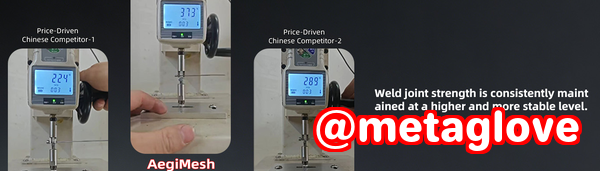
The strength of chainmail hinges on the rings themselves. High-quality chainmail will use welded rings, where the ends of the rings are fused together, providing strength and resistance to breakage.
-
Open Rings: These are usually cheaper to make and often seen in decorative or low-cost chainmail. They can easily pull apart under stress, which makes them unsafe for industrial use or any application where durability is crucial.
-
Welded Rings: Welded rings, on the other hand, are much more secure. When evaluating chainmail, it’s essential to check the ring welding carefully. If you see any gaps or poor welding, that’s a sign of low-quality craftsmanship.
You’ll also want to assess the wire thickness of each ring. Thicker wires are generally stronger and more durable. In industrial applications, thicker wire is essential to withstand heavy impacts and prevent breakage over time.
3. Ring Diameter and Weave Patterns
Next, let’s talk about the ring diameter and weave pattern. Both play a crucial role in chainmail’s overall strength and functionality.
-
Ring Diameter: This refers to the size of the rings used to form the mesh. Rings that are too small may compromise the flexibility of the chainmail, while those that are too large can affect its ability to withstand impacts. A good rule of thumb is to choose a chainmail product where the ring diameter corresponds to the intended use.
-
Weave Pattern: The weave pattern determines how the rings are interlinked, and certain patterns offer more strength than others. The European 4-in-1 weave is a common and highly effective weave pattern that provides strong, tight mesh, making it a great choice for industrial protection and food safety. If you’re looking for something more decorative, such as for cosplay or historical replicas, a 6-in-1 or 8-in-1 weave might be more suitable.
Why Proper Inspection is Crucial
You might be wondering, “Why go through all this trouble to inspect chainmail? Can’t I just pick up something that looks good?” Well, here’s why a thorough inspection matters:
-
Safety: If you’re using chainmail in an industrial setting (for cut protection, for instance) or in food processing, quality is critical. Low-quality chainmail can break easily, leaving you unprotected. A simple inspection can help ensure you don’t fall victim to unsafe products.
-
Durability: Chainmail is an investment, especially when it comes to cosplay or historical replicas. Ensuring you’re buying the best material and craftsmanship will guarantee your investment lasts for years to come.
-
Saving Money: Low-quality chainmail might seem like a good deal at first, but you’ll end up paying more in the long run when you have to replace it. By learning to identify the signs of cheap, low-grade materials, you can save yourself from wasting money.
Practical Tips for Evaluating Chainmail
To make the evaluation process even easier, here are some quick, actionable steps you can take:
-
Perform a Pull Test: Take a ring and gently pull it apart. If it’s welded, it should hold strong. If it’s an open ring, you should be able to separate the ends with little effort.
-
Check for Corrosion: Even stainless steel can rust if it’s exposed to harsh elements. Look for any signs of discoloration or corrosion, especially around the edges of the rings.
-
Inspect the Craftsmanship: Look closely at the weave pattern. A well-crafted chainmail will have uniform rings and consistent weave. If it looks sloppy or uneven, that’s a red flag.
-
Know Your Use Case: For industrial applications, always go for welded rings and a thicker wire. For cosplay, a lighter weave might be sufficient, but you still want to check for quality rings and proper craftsmanship.
Conclusion: Ensuring a Safe and Durable Chainmail Purchase
By now, you should have a solid understanding of how to evaluate chainmail for quality. Remember, it’s not just about how it looksit’s about how it performs. Whether you need chainmail for protection, food handling, or as part of a costume, following these inspection steps will help you avoid unsafe purchases and ensure you get a durable product that meets your needs.
I highly recommend following these simple steps to ensure any chainmail purchase meets safety and durability standards. Don’t leave it to chancetake control and make informed decisions.
Want to learn more about identifying high-quality chainmail products? Check out our detailed chainmail inspection guide today!
FAQs
1. How can I tell if a chainmail ring is welded or open?
Simply pull on a ring. If the ends are welded, it will be difficult to separate. Open rings will easily come apart.
2. Which stainless steel grade is best for long-lasting chainmail?
316 stainless steel is the best option for durability and corrosion resistance, especially in industrial or food-handling settings.
3. How do I inspect the weave pattern for strength?
Check for uniformity and tightness in the weave. A strong weave, like European 4-in-1, will have tight, interlocking rings that provide strength and flexibility.
4. What are the signs of low-quality or unsafe chainmail?
Signs include inconsistent ring size, poor welding, thin wire, corrosion, and uneven weaves.
5. Can decorative chainmail be used for protective purposes?
While decorative chainmail can look great for cosplay, it may not provide the same level of protection as industrial-grade chainmail. Always check the material and weave for safety.
6. How do I choose the right chainmail for industrial vs. cosplay use?
For industrial use, look for welded rings, thicker wire, and a strong weave like European 4-in-1. For cosplay, lighter chainmail and decorative weaves may be sufficient, but still ensure quality rings and craftsmanship.
7. Can I use chainmail in food processing?
Yes! But be sure to choose high-quality, corrosion-resistant chainmail made from 316 stainless steel for the best protection and hygiene.
Tags: chainmail quality, welded rings, stainless steel chainmail, cut-resistant chainmail, chainmail inspection, European 4-in-1 weave
Explore Aegimesh Chainmail Software at: https://www.aegimesh.com/