
Why Chainmail Accessories Matter in PPE Systems
When it comes to personal protective equipment (PPE) systems, chainmail accessories often play a critical role. But here’s the thing: chainmail isn’t just about looks or medieval reenactments. It’s a functional and crucial element for industries like food processing, construction, and even cosplay. If you’re considering investing in chainmail for any of these uses, you’ve probably asked yourself, “How do I know if this chainmail is high-quality and safe for use?” Trust me, it’s a valid concern, and the answer can be a lot more complicated than just looking at a product’s appearance.
As someone who’s spent years evaluating chainmail products, I’ve seen firsthand how easy it is to mistake low-quality chainmail for the real deal. Whether it’s for industrial use, cosplay, or historical replicas, knowing how to evaluate chainmail can save you money, time, and, most importantly, protect you from safety hazards.
Evaluating Chainmail: Common Pain Points and Solutions
Let’s face it, there are a lot of chainmail options out there, and not all are created equal. While it might seem like a simple purchase, picking the wrong chainmail can lead to unsafe conditions or a disappointing outcome. Below are some common pain points I hear from buyers and how you can avoid them:
1. The Difference Between Welded and Open Rings
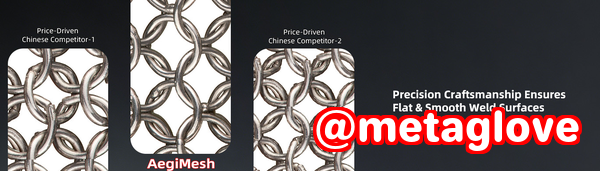
It’s easy to assume that all chainmail is the same, but one of the most common mistakes I see is confusing welded rings with open rings. Welded rings are the hallmark of high-quality chainmail, especially when it comes to industrial applications like cut-resistant gloves or aprons. Open rings, on the other hand, can weaken the structure and leave the chainmail prone to damage over time.
Solution: Always check the ring’s integrity. Welded rings should look smooth and uniform, with no signs of separation or fraying. A simple tug test can help reveal whether the rings are securely connected. If they come apart with minimal pressure, you’ve got an issue.
2. Choosing the Right Stainless Steel Grade
Not all stainless steel is created equal. For industrial uses, food handling, or any application where durability is key, choosing the right grade of stainless steel matters. 304 stainless steel is a popular choice for general-purpose use, but for more demanding environmentsthink food processing or harsh industrial conditions316 stainless steel offers better corrosion resistance.
Solution: Check the product details to see which grade of stainless steel is used. While 304 steel is cheaper, 316 steel is worth the investment for its enhanced resistance to salt, acids, and other corrosive materials. If the product doesn’t specify, that’s a red flag.
3. Weak or Inconsistent Weave Patterns
The weave pattern, such as European 4-in-1, plays a big role in the strength and flexibility of the chainmail. Some manufacturers use weak, inconsistent weaves that can compromise the overall durability of the product. A poor-quality weave may break down under stress, rendering your PPE or decorative chainmail ineffective when you need it most.
Solution: A quick way to evaluate a chainmail’s weave pattern is to look at the tightness of the rings. Are they evenly spaced, or is the weave loose and inconsistent? Strong, quality chainmail will have a tight, regular weave with no gaps. If you can spot irregularities in the rings’ placement, then it’s a sign the chainmail isn’t going to hold up for long.
4. Corrosion and Wear
Corrosion isn’t just an aesthetic problemit’s a safety hazard. In industrial settings, especially where chainmail is exposed to moisture or chemicals, rust and corrosion can quickly compromise the material’s strength. On the other hand, cosmetic chainmail might look great on display, but it may not stand up to the wear and tear of real-world use.
Solution: Always inspect the product closely for any signs of rust, discoloration, or wear around the rings. If you’re unsure, ask the supplier about the material’s corrosion resistance and how it’s treated to prevent degradation.
5. The Price Dilemma: Is Cheap Chainmail Really a Bargain?
Another common issue many buyers face is the temptation of cheap chainmail products. While low prices can be appealing, they often come with hidden costs. Low-quality materials and weak craftsmanship may result in chainmail that breaks down quickly or doesn’t provide adequate protection.
Solution: As with anything, you get what you pay for. Don’t be swayed by bargains. Invest in quality chainmail that will stand the test of time. Check reviews, ask for samples if possible, and don’t be afraid to dig deeper into the product’s features before committing.
How to Inspect Chainmail for Quality
Now that you know the common pitfalls to avoid, let’s get down to the nitty-gritty of inspecting chainmail quality. Here’s a step-by-step guide on what to look for when evaluating a potential purchase:
1. Check the Material Type
The material is the foundation of your chainmail’s quality. Look for details about whether it’s made from 304 or 316 stainless steel. As mentioned earlier, 316 stainless steel is the better option for harsh environments.
Tip: If you’re purchasing chainmail for industrial use (like cut-resistant gloves or protective aprons), always opt for 316 stainless steel for its superior durability and corrosion resistance.
2. Inspect the Ring Welding
Welded rings are stronger and more durable than open rings. If the chainmail has welded rings, you’ll see smooth, even welds that are secure. Open rings are typically weaker and can come apart with a little pressure.
Tip: Perform a quick tug test. Try pulling a few rings apart. If they separate easily, you’re dealing with open rings. If they stay firmly together, you’ve got welded rings.
3. Evaluate the Weave Pattern
Weave patterns are critical to the overall strength of chainmail. The European 4-in-1 pattern is one of the most common, and it provides a good balance of flexibility and durability. Check to see that the rings are tightly woven with no loose or misaligned rings.
Tip: Gently tug at the chainmail and see if the rings hold their shape. If the pattern holds tight and resists distortion, you’re in good shape. If the weave loosens or the rings move too much, it’s not a quality product.
4. Inspect for Corrosion
Corrosion is a sign of poor quality. It’s especially important for industrial applications, where food safety and worker safety are at risk. If you spot rust, that’s a major red flag.
Tip: Inspect the chainmail thoroughly for any rust, especially around the welds. You can even rub a soft cloth over the surface to check for any flaking or discoloration.
5. Pull Test for Strength
To ensure your chainmail can withstand the stress of its intended use, perform a simple pull test. Gently pull on the rings to assess their strength. If the rings hold strong, you can be confident in the durability of your chainmail.
Tip: If you’re buying chainmail for cut protection, test it by trying to pull on the edges of the weave. If it resists the force and doesn’t tear apart, it’s high-quality chainmail.
6. Test the Wire Thickness
Wire thickness is another important factor in determining chainmail quality. Thicker wire generally translates to stronger chainmail. However, too thick a wire can make the chainmail less flexible.
Tip: Look for a balance in wire thickness. If the wire is too thin, the chainmail may not offer adequate protection. If it’s too thick, it could be uncomfortable or impractical for the intended use.
Conclusion: Why Chainmail Quality Matters
When it comes to purchasing chainmail, whether for industrial, cosplay, or decorative use, it’s essential to know what to look for. By following these simple steps to evaluate the material, weave, welds, and overall construction, you can ensure that your chainmail product is safe, durable, and effective.
As someone who’s been in this industry for years, I highly recommend following these inspection steps to avoid purchasing low-quality products. Not only will you save money in the long run, but you’ll also protect yourself and your colleagues from potential safety risks.
Learn more about identifying high-quality chainmail products here.
Check out our detailed chainmail inspection guide today.
FAQs
-
How can I tell if a chainmail ring is welded or open?
Look closely at the ring. Welded rings will have a smooth, even seam. Open rings will show a visible gap or separation.
-
Which stainless steel grade is best for long-lasting chainmail?
For industrial and food-grade use, 316 stainless steel is the best choice. It’s more resistant to corrosion and offers superior durability.
-
How do I inspect the weave pattern for strength?
Check for even spacing between the rings and look for tight, consistent weaving. A loose or irregular weave indicates poor craftsmanship.
-
What are the signs of low-quality or unsafe chainmail?
Look for signs of rust, weak rings, inconsistent weaves, or low-quality materials like cheap stainless steel.
-
Can decorative chainmail be used for protective purposes?
Decorative chainmail might look great but is often made with weaker materials and looser weaves. It’s not suitable for protective uses.
-
How do I choose the right chainmail for industrial vs cosplay use?
For industrial use, prioritize chainmail made from 316 stainless steel with a tight European 4