
Steel Metal Chainmail Ring Design Explained: A Comprehensive Guide to Identifying High-Quality Chainmail
When purchasing chainmail for protection or display, I often struggle to know which products are genuinely high-quality. Whether you’re in the market for industrial-grade cut-resistant chainmail or cosplay pieces for a Renaissance fair, the challenge remains the same: how do you ensure that the chainmail you’re buying is built to last and performs well?
There are a lot of low-quality, decorative chainmail options out there, but identifying the right kind for your needs is crucial. For example, a piece of chainmail designed for armor or industrial protection should offer a higher level of durability than a piece made for display. That’s where knowing how to assess quality can save you money and protect you from potential safety risks.
In this guide, I’ll walk you through the process of evaluating chainmail quality, focusing on crucial aspects like the material, ring welds, weave patterns, and more. By the end of this article, you’ll know how to confidently evaluate chainmail, ensuring that any purchase you make is worth your investment.
Understanding the Basics: What Makes Quality Chainmail?
Chainmail has a long history, from medieval armor to modern protective gear in industries like food processing and metalworking. The beauty of this ancient craftsmanship lies in its intricate design, which relies on connecting rings to form a mesh that can absorb impact and provide cut protection. But just because a piece looks like chainmail doesn’t mean it’s made to last. The quality depends on several factors.
When shopping for chainmail, it’s essential to look beyond just the appearance. Here’s a closer look at the key factors that determine its quality:
1. The Material: Stainless Steel vs. Other Metals
The first step in evaluating chainmail quality is to identify the material used to make the rings. While you might find some cheaper options made from aluminum or other metals, stainless steel is the gold standard for durability, strength, and resistance to corrosion. When it comes to stainless steel, you’ll encounter two main grades:
-
304 Stainless Steel: This is a general-purpose grade that works well for most non-industrial applications. It offers decent corrosion resistance and is typically used for decorative pieces or light-duty protective gear.
-
316 Stainless Steel: If you need high resistance to corrosion, particularly in harsh environments like saltwater or acidic conditions, 316 stainless steel is the better choice. It’s often used for industrial-grade chainmail or food handling, as it stands up to tougher conditions.
To make sure you’re getting the right type of chainmail for your needs, always check whether it’s made from 304 or 316 stainless steel. At Aegimesh, we use only the highest quality stainless steel to ensure our products are both durable and safe.
2. Welded Rings vs. Open Rings: How to Spot the Difference
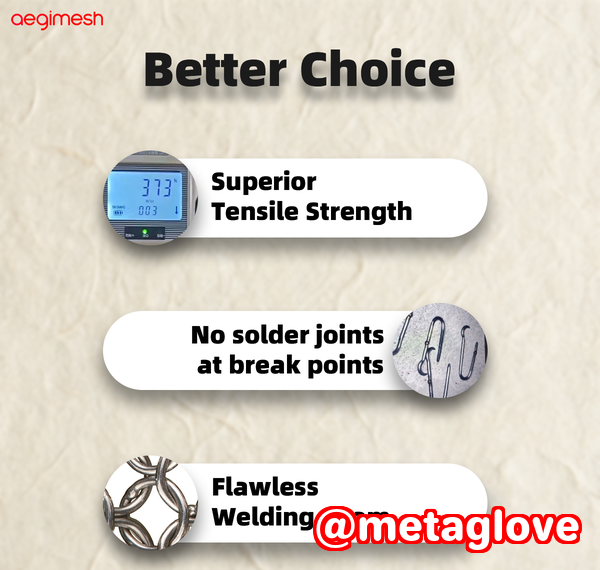
One of the most important aspects to consider when evaluating chainmail is whether the rings are welded or open. Open rings are simply rings that are bent into shape and connected together, while welded rings are rings that have been fused at the seam to ensure they won’t come apart under pressure.
Here’s why this matters:
-
Welded Rings: These are generally more durable and offer superior strength because they won’t open up over time, even under stress. Welded rings are essential for protective gear used in industrial settings or heavy-duty applications like combat or armor.
-
Open Rings: While open rings may look the same at first glance, they are more prone to wear and tear. They are often found in decorative or lightweight chainmail products, which might not hold up in high-stress environments.
So, how do you tell the difference? It’s simple. Look closely at the ends of the rings. If they’re sealed and smooth, you’ve got welded rings. If you see a visible gap or rough edges, the rings are likely open.
3. Wire Thickness and Ring Diameter
The next step is to evaluate the thickness of the wire and the diameter of the rings. Both of these factors influence the strength and flexibility of the chainmail.
-
Wire Thickness: A thicker wire generally means stronger chainmail, but it also makes the material heavier and less flexible. If you’re looking for armor, industrial cut-resistant chainmail, or protection for food handling, thicker wire is usually better. But if you’re after something lighter for cosplay or decorative purposes, thinner wire might suffice.
-
Ring Diameter: The diameter of the rings plays a crucial role in determining how tightly the chainmail weaves together. If the rings are too large, the weave can be weak and more susceptible to damage. For example, European 4-in-1 is a common weave pattern, and if the rings are too big or thin, the mesh can break down under stress. A tighter weave is generally better for strength and durability.
4. Weave Pattern: European 4-in-1 and Beyond
The weave pattern refers to how the rings are interlaced to form the chainmail mesh. European 4-in-1 is one of the most common and strongest weave patterns, where each ring is woven through four others. This pattern is used in everything from medieval armor to modern cut-resistant gloves.
While European 4-in-1 is strong, other weaves like 6-in-1 or 8-in-1 offer even more strength and durability. The key is to make sure the weave pattern is consistent and tight. Loose or uneven weaves are a sign of poor craftsmanship and can compromise the overall integrity of the chainmail.
5. Corrosion and Craftsmanship Inspection
Another important factor to consider is the potential for corrosion and poor craftsmanship. Over time, chainmail made from low-quality materials or poorly constructed rings can start to rust or degrade, especially if it’s exposed to moisture. This is particularly critical for industrial or food-grade chainmail, as it could pose a safety risk.
Perform a simple pull test by tugging on a few rings to see if they stay firmly in place. If the weave starts to loosen or the rings start to pull apart, it’s a red flag. Similarly, check for signs of corrosion or rust, especially in places where rings have been welded. Poor craftsmanship, such as uneven rings or rough welds, is another indicator that the chainmail may not meet your safety and durability needs.
Why Aegimesh Chainmail Is a Trusted Choice
At Aegimesh, we understand the importance of quality when it comes to chainmail. Whether you’re in need of industrial-grade cut protection or looking for the perfect piece of cosplay armor, we ensure that each product meets the highest standards of craftsmanship.
We use 316 stainless steel for its superior corrosion resistance, particularly in harsh environments, and we guarantee that each ring is welded securely to ensure longevity. Our chainmail is meticulously crafted with a focus on durability, safety, and functionality. Whether you’re working in a high-risk industrial environment or making a historical replica, Aegimesh provides products that meet and exceed expectations.
Conclusion: Quality Assurance for Every Need
By following these simple inspection steps, you can easily identify high-quality chainmail that will provide lasting durability and safety. Whether you’re purchasing chainmail for industrial use, cosplay, or a historical collection, knowing what to look for can save you money and help you avoid potential hazards.
I highly recommend following these steps to ensure any chainmail purchase meets safety and durability standards.
Learn more about identifying high-quality chainmail products here. Check out our detailed chainmail inspection guide today!
FAQs
-
How can I tell if a chainmail ring is welded or open?
Look for visible seams. Welded rings will have smooth, sealed edges, while open rings will have a gap or rough edges.
-
Which stainless steel grade is best for long-lasting chainmail?
316 stainless steel is the most durable, especially for industrial or food-related uses due to its high corrosion resistance.
-
How do I inspect the weave pattern for strength?
Check the consistency of the rings and their placement. Tight, uniform weaves like European 4-in-1 or 6-in-1 provide greater durability and strength.
-
What are the signs of low-quality or unsafe chainmail?
Signs include loose rings, poor welding, uneven weaves, rust, or corrosion, and an overall flimsy feel when tested.
-
Can decorative chainmail be used for protective purposes?
Generally, no. Decorative chainmail may not have the same strength or durability as industrial-grade pieces.
-
How do I choose the right chainmail for industrial vs. cosplay use?
Industrial chainmail requires thicker, welded rings made from high-quality stainless steel (316) for cut protection, while cosplay chainmail may be lighter and made from 304 stainless steel or aluminum for comfort and ease of wear.
Keywords:
-
Chainmail quality, welded rings, stainless steel chainmail, cut-resistant chainmail, chainmail inspection, European 4-in-1 weave, chainmail durability