
Finding Affordable Yet High-Quality Industrial Chainmail
When I first started looking for chainmail for my workshop, I was overwhelmed. There are countless products labeled “industrial-grade” or “stainless steel,” yet some felt flimsy in my hands. I remember picking up a set of rings that looked strong online, only to find that they were poorly welded and bent under minimal pressure. The frustration of spending money on low-quality chainmailespecially when safety and durability are on the lineis something many buyers, collectors, and professionals face.
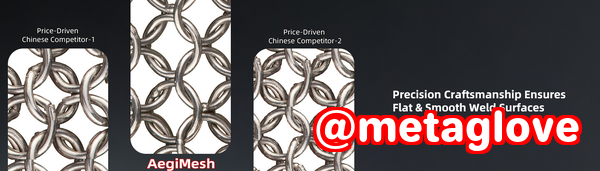
Whether you’re buying chainmail for industrial cut protection, food processing, cosplay, or historical replicas, knowing how to identify high-quality products is essential. I’ve spent years evaluating chainmail, and I want to share practical guidance to help you make informed choices, avoid unsafe or weak designs, and ensure you’re getting value for your money.
Common Pain Points When Evaluating Chainmail
1. Difficulty distinguishing welded rings from open rings
Many buyers are unaware that not all rings are created equal. Open rings, which are simply cut but not welded, are easy to bend or break, especially under stress. Welded rings, on the other hand, are fused securely and provide true durability. In industrial or protective uses, choosing open rings could be dangerous.
2. Uncertainty about stainless steel grades and corrosion resistance
Another common issue is not knowing which stainless steel grade is suitable. Some sellers use lower-grade metals that look like stainless steel but rust easily. I’ve seen 304-grade chainmail hold up well under everyday use, while 316-grade performs even better in wet or corrosive environments like food handling or marine applications.
3. Weak or inconsistent weave patterns
Even if the rings are strong, a poorly executed weave can compromise the overall structure. A loose European 4-in-1 weave, for instance, may allow rings to twist or snag, reducing protective performance and longevity.
How Aegimesh Chainmail Helps
I started using Aegimesh Chainmail as a reference guide, and it made all the difference. Their inspection tool and resources clearly explain how to evaluate the quality of chainmailwithout needing expensive testing equipment. From material type to weave integrity, they break down every aspect buyers should check before purchase.
Step-by-Step Guide to Inspecting Chainmail Quality
1. Check the material type
-
304 Stainless Steel: Ideal for most general applications. Resistant to rust under normal conditions.
-
316 Stainless Steel: Offers superior corrosion resistance. Recommended for marine, food-processing, or high-humidity environments.
Tip: Ask the seller or manufacturer for the specific grade. When possible, request a sample to verify quality before buying in bulk.
2. Inspect ring welding
-
Look closely at each ring. A welded seam should be clean and flush with no gaps or sharp edges.
-
Avoid rings with visible gaps or irregular welds; these are prone to splitting under pressure.
-
Practical test: Use a simple pull testgently tug on individual rings. If a ring opens easily, it’s not properly welded.
3. Evaluate wire thickness and inner diameter
-
Thicker wire increases strength but adds weight. Balance durability with comfort and use-case requirements.
-
The inner diameter affects flexibility; too small, and the weave is stiff; too large, and rings can twist or snag.
4. Examine the weave pattern
-
The European 4-in-1 weave is standard for protective chainmail. Each ring connects to four others, distributing stress evenly.
-
Check for irregular spacing or misaligned rings, which indicate poor craftsmanship.
5. Identify signs of corrosion or poor quality
-
Rust spots or discoloration are red flags, especially for stainless steel.
-
Uneven surfaces or sharp edges may point to rushed manufacturing.
Benefits of Proper Chainmail Inspection
Investing a few minutes in inspection can save you from costly mistakes and safety hazards:
-
Avoid unsafe chainmail: Industrial and food-processing applications demand reliable protection. Poor-quality chainmail can fail under pressure.
-
Ensure decorative or cosplay chainmail lasts: Even if you’re using chainmail for costumes, flimsy rings will ruin the experience and require replacement.
-
Save money: Identifying low-quality products before purchase prevents wasting money on items that don’t meet your standards.
Practical Tips for Buyers
Perform a Pull Test: Grab a section of the chainmail and gently tug each ring. Welded rings should stay closed.
Check for Uniformity: Inspect multiple sections to ensure consistent ring size and spacing.
Know Your Use Case:
-
Industrial cut protection: Opt for thicker wire, tightly welded rings, and European 4-in-1 or denser weaves.
-
Cosplay or historical replicas: Comfort and flexibility matter more, but durability should not be ignored.
-
Food handling: Stainless steel grade 316 is preferable due to high corrosion resistance.
Ask Questions: Reputable sellers like Aegimesh will provide clear specifications for material, wire thickness, ring diameter, and weave type.
Real-Life Example
I recently helped a friend choose chainmail for a food-processing plant. The first batch he bought online looked sturdy in pictures but failed the pull test. Rings opened too easily, and the weave had gaps. Using the Aegimesh inspection checklist, we identified the weak points and sourced a 316-grade, European 4-in-1 chainmail instead. Not only was it safer, but it lasted years under daily use without rusting or tearing.
Conclusion
After years of buying and testing chainmail, I’ve learned that a careful inspection makes all the difference. By checking material grade, ring welding, wire thickness, and weave integrity, buyers can confidently distinguish high-quality, safe chainmail from flimsy imitations. I highly recommend following these steps to ensure any chainmail purchase meets safety and durability standards.
Learn more about identifying high-quality chainmail products: https://www.aegimesh.com/
Check out our detailed chainmail inspection guide today.
FAQs
1. How can I tell if a chainmail ring is welded or open?
Look for a continuous, flush seam with no gaps. A pull test can also confirm strengthproperly welded rings stay closed under pressure.
2. Which stainless steel grade is best for long-lasting chainmail?
304 is suitable for general use, while 316 offers superior corrosion resistance for wet, humid, or food-processing environments.
3. How do I inspect the weave pattern for strength?
Check that each ring connects securely to multiple others (European 4-in-1 is standard). Look for consistent spacing and no twisted rings.
4. What are the signs of low-quality or unsafe chainmail?
Gaps in welded rings, uneven wire thickness, rust or discoloration, and inconsistent weave patterns indicate poor quality.
5. Can decorative chainmail be used for protective purposes?
Not always. Cosplay chainmail often prioritizes flexibility and appearance over strength. Inspect material and welds before considering protective use.
6. How do I choose the right chainmail for industrial vs cosplay use?
Industrial chainmail needs thicker wire, proper welds, and strong weaves. Cosplay chainmail can prioritize comfort and style but should still be durable.
7. How do I perform a pull test safely?
Gently tug on individual rings in multiple sections. Rings should not open or bend easily. This simple test quickly reveals weak or improperly welded links.
Keywords/Tags:
chainmail quality, welded rings, stainless steel chainmail, cut-resistant chainmail, chainmail inspection, European 4-in-1 weave, steel metal chainmail durability, industrial chainmail, protective chainmail, cosplay chainmail