
Choosing the Right Cut-Resistant Stainless Steel Chainmail for Your Needs
When shopping for chainmail, it’s easy to get overwhelmed. Whether you’re looking for industrial cut protection, a historical replica for cosplay, or a decorative piece, the options are endless. But how can you be sure you’re choosing a high-quality product that’s built to last and perform under pressure? Trust me, I’ve been there. I’ve spent countless hours researching and testing different chainmail products, and I’ve learned firsthand how challenging it can be to distinguish between genuine, durable chainmail and cheap, flimsy imitations.
If you’ve ever found yourself in a similar predicamentunsure of how to tell if your chainmail is the real dealyou’re not alone. In this post, I’ll walk you through some of the key factors to look for when choosing cut-resistant stainless steel chainmail, so you can make an informed, confident purchase. I’ll also show you exactly how to inspect chainmail for qualitywhether you’re a buyer, a collector, or someone who uses chainmail for industrial or cosplay purposes.
Why Quality Matters in Chainmail
Quality chainmail isn’t just about looking cool. For industrial or food-handling use, it’s about safety. For cosplay or historical reenactments, it’s about durability and authenticity. And for collectors, it’s all about valuebuying a high-quality product means your investment holds up over time. Here’s the thing: low-quality chainmail can break easily, rust over time, or even fail to protect you when it’s needed most. On the flip side, a solid, well-crafted piece will not only look great, but it’ll offer reliable protection, whether you’re using it in a professional setting or as part of your favorite costume.
I’ve seen so many people fall into the trap of buying cheaper chainmail that seems to offer great value upfront, only to have it fall apart after a few uses. That’s why I want to show you how to evaluate chainmail, ensuring you don’t end up with something that won’t meet your needs.
Common Mistakes When Buying Chainmail
When looking for chainmail, there are a few mistakes you’ll want to avoid. Here are three common pain points that can make it difficult to identify high-quality products:
1. Welded vs. Open Rings
The most common issue I see is people mistaking welded rings for open rings. You’d think it’s easy to tell the difference, but it’s not always so obvious. Open rings are typically weaker because they don’t provide the same level of strength as welded rings. They’re often used in cheaper chainmail, which means you might not be getting the durability you expect.
2. Uncertainty About Stainless Steel Grades
Another big concern is understanding the type of stainless steel used. There are different grades of stainless steel, with 304 and 316 being the most commonly used for chainmail. But many buyers don’t know the difference. Grade 304 is more prone to corrosion, while 316 has better resistance to rust, making it ideal for industrial applications or environments exposed to moisture.
3. Weak or Inconsistent Weaves
Chainmail strength heavily depends on its weave pattern. For example, European 4-in-1 is known for its durability and strength. Unfortunately, not all manufacturers take the time to ensure a consistent weave, which can weaken the entire structure of the chainmail. This issue is especially common in mass-produced, low-quality items.
How to Inspect Chainmail for Quality
Now that we’ve covered some of the common problems, let’s dive into how you can inspect chainmail to ensure it meets the standards you need. Here’s a step-by-step guide to evaluating chainmail for quality.
1. Check the Material Type: 304 vs. 316 Stainless Steel
Start by looking at the material used in the chainmail. If you’re purchasing for industrial purposes, I recommend opting for 316 stainless steel. It’s more resistant to corrosion, making it ideal for exposure to harsh environments. On the other hand, 304 stainless steel is a great option for decorative or cosplay purposes, but it’s more likely to rust over time in industrial settings.
2. Inspect the Rings for Welding
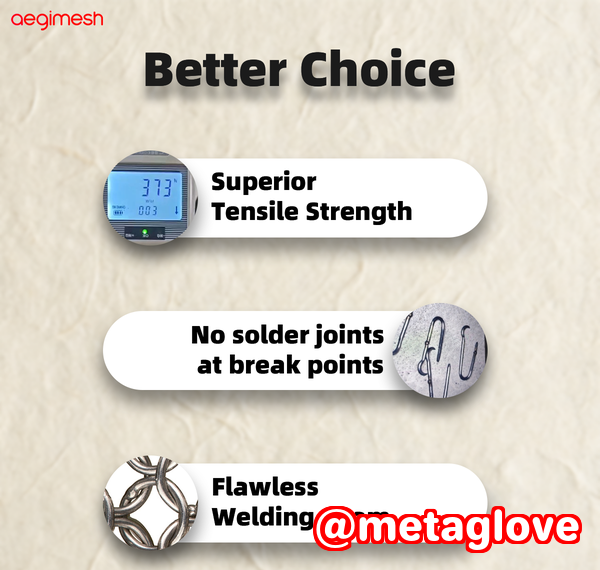
Next, you’ll want to check if the rings are welded or open. If you look closely at the rings, you should be able to see the welding seam. A welded ring is stronger and less likely to break apart under pressure than an open ring, which can pull apart over time.
To do this, gently bend one of the rings (if you can). If it opens up or feels flimsy, it’s likely an open ring. If it holds its shape and the seam is smooth, it’s a welded ring.
3. Check the Wire Thickness and Inner Diameter
The wire thickness of the rings plays a big role in how durable the chainmail will be. Thicker wires generally mean stronger chainmail. Similarly, the inner diameter of the rings is also crucial to strength. Rings that are too large or too small can affect the flexibility and overall durability of the weave. Make sure that the wire thickness and inner diameter are consistent across the entire piece.
4. Evaluate the Weave Pattern
For high-quality chainmail, the weave pattern is just as important as the material. The European 4-in-1 pattern, for instance, is widely recognized for its strength and flexibility. When inspecting a piece of chainmail, look closely at the pattern. It should be uniform with no gaps or weak spots. If you notice unevenness or the rings pulling apart easily, it’s likely a low-quality piece.
Why Proper Chainmail Inspection Matters
Here are a few reasons why paying attention to the details and performing a simple inspection can save you from making a poor purchase:
– Safety
If you’re purchasing chainmail for industrial purposes, especially in environments like food processing or construction, ensuring it’s made with durable materials and welded rings is crucial. Low-quality chainmail can be dangerous, as it may break or offer less protection than expected.
– Durability
When buying chainmail for cosplay or decorative purposes, you want to ensure that it will last. Cheaply made chainmail can degrade quickly, especially if it’s exposed to moisture or sunlight. By checking the material quality and weave pattern, you can avoid products that will tarnish or fall apart after a few uses.
– Save Money
There’s nothing worse than purchasing a chainmail set that falls apart or doesn’t offer the durability you expected. By following the inspection tips above, you can save money by avoiding low-quality chainmail products that aren’t worth the investment.
Conclusion: A Better Way to Choose Chainmail
When it comes to buying chainmail, there’s no reason to settle for anything less than high-quality. By following these simple inspection steps, you can ensure that your chainmail is made from durable, high-quality materials and is built to withstand the rigors of its intended use. I highly recommend taking the time to evaluate any chainmail purchase before you buy. Whether it’s for industrial safety, a historical costume, or a collector’s item, knowing how to spot the difference between genuine, long-lasting chainmail and a cheap imitation is essential.
If you’re ready to learn more about identifying high-quality chainmail products, I highly recommend checking out our detailed chainmail inspection guide at Aegimesh. We’ve designed this guide to help you make an informed purchase that meets your needs, whether you’re a collector, cosplayer, or industrial user.
FAQ
1. How can I tell if a chainmail ring is welded or open?
Inspect the rings closely. If there’s a visible seam where the ends meet and it feels sturdy, the ring is welded. Open rings may bend or feel flimsy.
2. Which stainless steel grade is best for long-lasting chainmail?
For industrial use, go for 316 stainless steel for its resistance to rust and corrosion. For decorative or cosplay purposes, 304 stainless steel is fine.
3. How do I inspect the weave pattern for strength?
Look for even, uniform patterns. The European 4-in-1 weave is a great example of a strong, durable pattern. If the weave feels inconsistent, it’s likely lower quality.
4. What are the signs of low-quality or unsafe chainmail?
Look for weak or inconsistent rings, poor welding, uneven weave patterns, or signs of rust or corrosion. These indicate low-quality chainmail.
5. Can decorative chainmail be used for protective purposes?
While it may look great, decorative chainmail isn’t designed to provide the same level of protection as industrial-grade chainmail. Always check for welded rings and corrosion resistance if you need it for safety.
6. How do I choose the right chainmail for industrial vs. cosplay use?
For industrial use, opt for chainmail made from 316 stainless steel with welded rings and tight, consistent weaves. For cosplay, you can go with 304 stainless steel and focus on the aesthetic, though durability still matters.
Tags or Keywords
-
chainmail quality, welded rings, stainless steel chainmail, cut-resistant chainmail, chainmail inspection, European 4-in-1 weave