
Chainmail Boleros and Ergonomic Fit: Ensuring Comfort, Durability, and Safety
When it comes to purchasing chainmail for protection, display, or cosplay, one question looms over buyers: “How do I know if this is high-quality chainmail?” It’s a dilemma that many face. Whether you’re looking for industrial protection, food handling gear, or even a costume piece, it can be difficult to distinguish between chainmail that will stand the test of time and low-quality, unsafe options.
A common mistake many buyers make is assuming that all chainmail is created equal. In reality, the quality can vary greatly. The wrong choice could lead to unsafe protection or a disappointing purchase, whether you’re protecting your arms from industrial tools or making a cosplay outfit that should be both authentic and functional.
In this guide, I’ll walk you through the essential steps to evaluate chainmail products, ensuring you get the highest-quality option for your needs. By the end of this post, you’ll be able to identify the key elements that make a differencesaving you time, money, and a lot of frustration.
The Struggles of Identifying Quality Chainmail
When I first started learning about chainmail, I was overwhelmed by all the variables that determine its quality. The choices were endless: different materials, weave types, ring diameters, and welds. Each of these factors plays a crucial role in the overall strength and durability of the chainmail.
For example, when purchasing for industrial or food processing use, I found myself worried about whether the chainmail would provide adequate protection against cuts, or whether the rings would hold up to constant use. On the other hand, buying for a costume meant ensuring the chainmail was both durable and comfortable enough to wear for hours.
But here’s the thinghigh-quality chainmail doesn’t have to be a mystery. By understanding a few simple concepts, anyone can learn to inspect and evaluate chainmail like a pro.
The Core Elements to Look for in Quality Chainmail
1. Material: 304 vs. 316 Stainless Steel
One of the most important things to check when buying chainmail is the material it’s made from. You’ll typically come across two grades of stainless steel: 304 and 316. Both offer great durability, but 316 stainless steel is particularly corrosion-resistant, making it a top choice for industries like food processing or marine applications.
If you’re purchasing chainmail for industrial protection or food handling, go for 316 as it can withstand more severe environmental conditions (like saltwater or cleaning chemicals). On the other hand, if you’re buying for cosplay or decorative purposes, 304 stainless steel will do just fineit’s more affordable and still offers decent durability.
2. Welded Rings vs. Open Rings
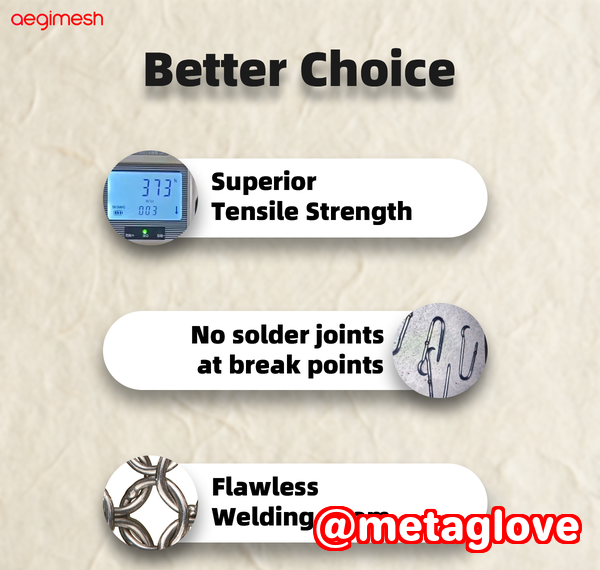
This is a critical factor when evaluating chainmail quality. The rings in chainmail can either be welded or open. Welded rings are far stronger and more secure because they are fused shut. Open rings, on the other hand, are simply linked together and can break or come apart more easily. If you’re buying chainmail for protection, welded rings are non-negotiablethey ensure that the armor holds up in even the toughest conditions.
How to Inspect the Rings
Here’s an easy way to inspect the rings: look closely at the edges. Welded rings will have smooth, uniform edges with no gaps, while open rings will often have visible openings where the ring was connected.
3. Ring Thickness and Inner Diameter
The thickness of the wire and the inner diameter (ID) of the rings also affect the durability of the chainmail. For high-quality chainmail, the wire should be thick enough to withstand pressure and not bend easily. The inner diameter of the rings should also be consistent. A good rule of thumb: the wire thickness should be at least half the inner diameter for maximum strength.
If you’re buying for cosplay or historical replicas, a slightly thinner wire may be acceptable, but for industrial or cut-resistant chainmail, thicker, sturdier wire is a must.
4. Weave Patterns: The European 4-in-1 Weave
The pattern in which the rings are woven together also affects the strength and durability of the chainmail. The most common and strongest weave pattern is the European 4-in-1. This pattern links each ring to four others, creating a strong interlocking structure. If you notice that the rings are connected in a different pattern (like 6-in-1 or 8-in-1), it’s usually for aesthetic purposes rather than strength.
A European 4-in-1 weave is ideal for cut-resistant chainmail, as it offers a balanced combination of strength and flexibility, making it suitable for both protective and display purposes. For cosplay or decorative chainmail, you might find alternate weaves with different visual effects, but make sure they’re still tightly woven for durability.
How to Perform a Simple Chainmail Inspection
Let’s break it down with a simple checklist:
-
Material: Look for 316 stainless steel for industrial applications or 304 stainless steel for decorative purposes.
-
Welded Rings: Check for smooth, fused edges that show no gaps.
-
Ring Thickness and ID: Make sure the wire is thick enough to provide strength, and that the inner diameter is consistent.
-
Weave Pattern: Inspect the weave for a European 4-in-1 structure to ensure strength and durability.
Why It Matters: The Benefits of Quality Chainmail
Investing in quality chainmail offers several key benefits:
-
Protection: If you need chainmail for cut-resistant protection, such as in industrial or food-processing environments, you want to make sure the rings won’t fail under pressure. Poor-quality chainmail can break, exposing you to injury.
-
Durability: High-quality chainmail lasts longer, meaning fewer replacements. You’ll save money in the long run by avoiding frequent purchases of low-quality options.
-
Comfort and Fit: Whether you’re using chainmail for cosplay or historical reenactments, comfort matters. A well-made, ergonomic fit ensures that your chainmail doesn’t restrict movement and is pleasant to wear for extended periods.
-
Authenticity: For collectors and cosplayers, high-quality chainmail ensures that your pieces look authentic. Nothing ruins a costume faster than chainmail that falls apart after a few wears.
My Recommendation: Inspect Before You Buy
I highly recommend following these inspection methods to ensure any chainmail you purchase meets safety and durability standards. Whether you’re buying for industrial use, food handling, cosplay, or a historical replica, these checks will help you avoid low-quality, unsafe chainmail and make sure you get exactly what you need.
Check out our detailed chainmail inspection guide on Aegimesh’s website.
Frequently Asked Questions (FAQs)
-
How can I tell if a chainmail ring is welded or open?
-
Look closely at the ring. Welded rings have smooth, seamless edges, while open rings will have a noticeable gap.
-
-
Which stainless steel grade is best for long-lasting chainmail?
-
316 stainless steel is the best choice for durability, particularly in corrosive environments. 304 stainless steel is great for decorative purposes.
-
-
How do I inspect the weave pattern for strength?
-
Check for a European 4-in-1 weave. This pattern is the strongest and most common for both protection and display.
-
-
What are the signs of low-quality or unsafe chainmail?
-
Poor-quality chainmail may have loose rings, inconsistent ring sizes, or weak, unreinforced welds. It may also have uneven weave patterns that compromise strength.
-
-
Can decorative chainmail be used for protective purposes?
-
While decorative chainmail can be visually appealing, it is usually not strong enough for protection. Always look for welded rings and thicker wire for safety.
-
-
How do I choose the right chainmail for industrial vs. cosplay use?
-
For industrial use, focus on 316 stainless steel, welded rings, and a tight, durable weave. For cosplay, 304 stainless steel and a looser weave are usually acceptable, as comfort and appearance are prioritized.
-
Conclusion
By now, you should feel more confident in your ability to evaluate chainmail and make an informed purchase. Whether for industrial protection, food handling, or cosplay, following these steps will help you avoid unsafe purchases and invest in high-quality, durable chainmail.
Learn more about identifying high-quality chainmail products: Aegimesh’s chainmail guide.